

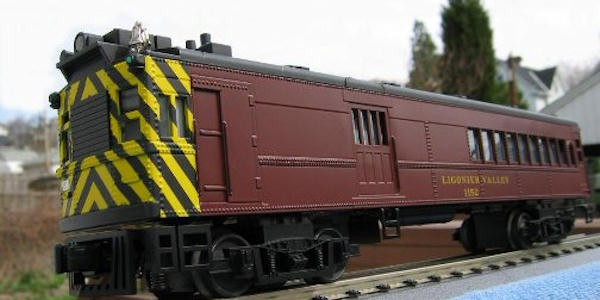
Ligonier Valley Rail Road Newspaper Articles
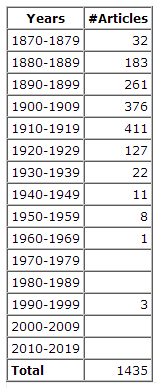 We have compiled over 1,400 newspaper articles that mention the Ligonier Valley Railroad, or related subjects. The articles were originally published starting in 1873 and our collection runs through 1995. Enjoy!
Ligonier Echo
Wednesday, December 6, 1933
R. B. Mellon Died Friday At Pgh. Home
Famous Banker Was Always Interested In Ligonier Valley
Built Railroad Here
Funeral services were held Sunday afternoon at the Fifth Avenue Mellon mansion in Pittsburgh, for Richard B. Mellon, one of the most prominent bankers and industrialists of the nation who died Friday morning at his Pittsburgh home following a brief illness with pneumonia. He was in his 75th year.
Mr. Mellon, well known in Ligonier Valley, where his benefactory projects brought
favor to many, was held in high esteem here. He was founder of the Rolling Rock Club and Farms near Ligonier. At the age of 19, he interested himself in building a rail road from Latrobe to Ligonier, which was named the Ligonier Valley Rail Road, and is still one of the Mellon properties.
He was a younger brother of Andrew W. Mellon former Secretary of the Treasury.
When Andrew Mellon became Secretary of the Treasury during the Harding
administration, he turned over direction of his wide business interests to Richard. The younger brother retained control of many of them after A. W. returned to private life.
He held directorships in hundreds of corporations, including the Aluminum Company of America, the Gulf Oil Corporation, the Union Trust of Pittsburgh, and the Mellon National Bank.
The youngest of three sons of Judge Thomas Mellon, Richard B. began his business career in 1872. He was 14, opening a realty and lumber trade jointly with Andrew.
The business venture being successful, Judge Mellon permitted his sons to enter his bank and gave over to Richard management of some of his personal business outside the bank.
With his family, R. B. Mellon shared in developing Pittsburgh from little more than a near-western trading town, built over vast stores of natural resources into the great
industrial city of the gay '90s and the early 20th century. The family's bank, staid, conservative, always seeking new channels for investing its funds, but never venturing into them until certain of the safety, encouraged the city's growth, and grew with it.
In later years, Richard was the president of the Mellon National Bank. He continued the tested, cautious policies inaugurated by his father and when the crash of 1929 knocked bank after bank from its pedestal, his guidance carried his own bank through the depression serenely, its sturdiness never questioned.
Mr. Mellon married Jennie King, daughter of the late Alexander and Sarah Cordelia King, a prominent Pittsburgh family. Mrs. Mellon survives, with their two children, Rickard K. Mellon and Mrs. Alan M. Scaife.